
Recovery science
Sleep, magnesium and the repair window you are probably wasting
Growth hormone, collagen synthesis and autophagy all run on the night shift. Why recovery, not training, is usually the limiting factor.
Training is a stimulus. It does not build anything. The building happens later, mostly while you are unconscious, and if that window is compromised then the stimulus was largely wasted effort.
What happens at night
Deep sleep — slow-wave sleep, concentrated in the first half of the night — is when the body does its structural work. Growth hormone secretion peaks. Collagen synthesis rises. Autophagy, the process by which cells clear damaged proteins and organelles, runs at its highest rate. Memory consolidation moves the day's learning into durable storage.
Cut deep sleep and you do not simply feel worse. You reduce the amount of repair performed. Sustained over months, the deficit shows up as slower recovery between sessions, stalled strength progress, dulled skin and a general sense that effort is not converting into result.
Why the Gulf and South Asia make this harder
Sleep quality is temperature-dependent. Core body temperature must fall by roughly one degree for sleep to initiate and deepen, and ambient heat obstructs that. A Karachi or Dubai summer works against sleep architecture directly, and air conditioning solves the temperature problem while introducing another — very dry air, which strips the skin barrier over a whole night, every night.
Add long fasting periods during Ramadan, late social eating, and the electrolyte losses that come with heat and sweat, and the recovery window narrows from several directions at once.
The minerals that gate it
Magnesium is a cofactor in hundreds of enzymatic reactions, several of them central to sleep: GABA receptor function, melatonin synthesis, and the regulation of the nervous system's shift toward parasympathetic dominance. Deficiency is common, and its signature — restless sleep, night cramps, difficulty switching off — is easily mistaken for stress.
Form matters more here than almost anywhere. Magnesium oxide is cheap and poorly absorbed, with most of an oral dose acting as a laxative. Magnesium glycinate is chelated to glycine, absorbs well, and carries a second benefit: glycine itself modestly lowers core body temperature and is associated with improved sleep onset.
Zinc is required for testosterone production, immune function and protein synthesis, and is lost readily through sweat. Vitamin B6 is a cofactor in converting tryptophan through serotonin to melatonin. L-theanine, an amino acid from tea, raises alpha-wave activity and reduces sleep latency without sedation — it makes it easier to stop thinking, rather than harder to stay awake.
None of these are sedatives. They remove obstacles to a process the body already wants to run. That distinction is why they can be taken indefinitely, and why they do not produce next-morning grogginess.
Protein, and the timing question
Muscle protein synthesis requires available amino acids, particularly leucine. Total daily intake matters far more than timing — the window is measured in hours, not minutes — but the evening dose is worth attention because it supplies the overnight repair period. Roughly 1.6 grams per kilogram of body weight daily is a reasonable target for anyone training seriously.
Collagen peptides are a partial exception to the general rule that protein source matters little. Glycine, proline and hydroxyproline are the specific amino acids connective tissue is built from, and there is reasonable evidence for collagen supplementation supporting tendon and joint recovery alongside skin.
The unglamorous summary
If recovery is the limiting factor, the highest-value interventions are dull and free. A cool, dark room. A consistent sleep and wake time, including at weekends. No caffeine after early afternoon — its half-life is around five hours, and metabolism varies widely. Alcohol reduced, since it fragments the second half of the night even when it speeds the first.
Supplement the minerals that gate the process, by all means. But recovery responds to the environment you create for it more than to anything you can swallow.
Keep reading
Microbiome science
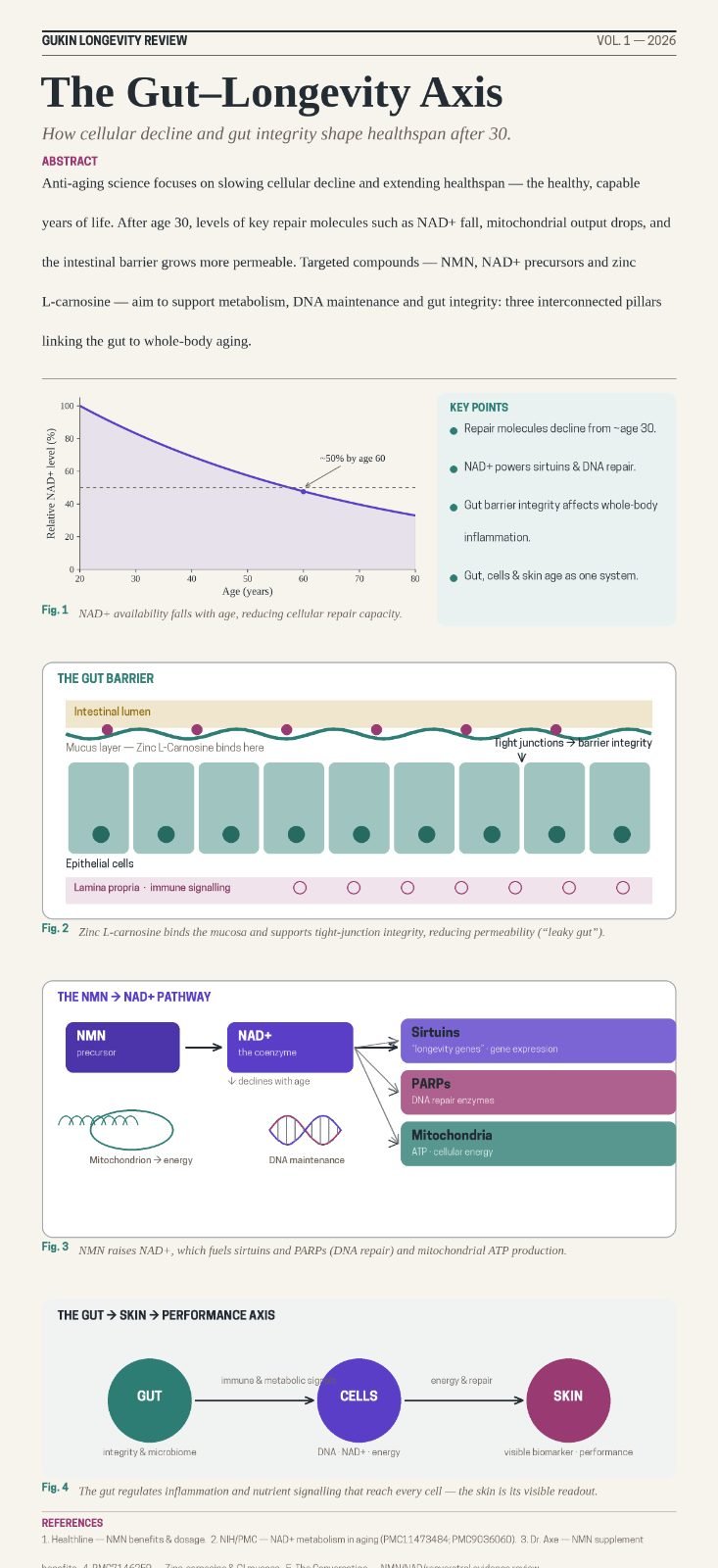
The gut–longevity axis: why ageing starts in your intestines
7 min read
Longevity science
NAD+ depletion: the quiet reason forty feels different
6 min read

Dermal biology
PDRN and peptides: signalling repair rather than adding moisture
5 min read
Written for education. Mechanisms described reflect published research on these compounds. Food supplements are not intended to diagnose, treat, cure or prevent any disease. Consult a physician before starting any supplement.